
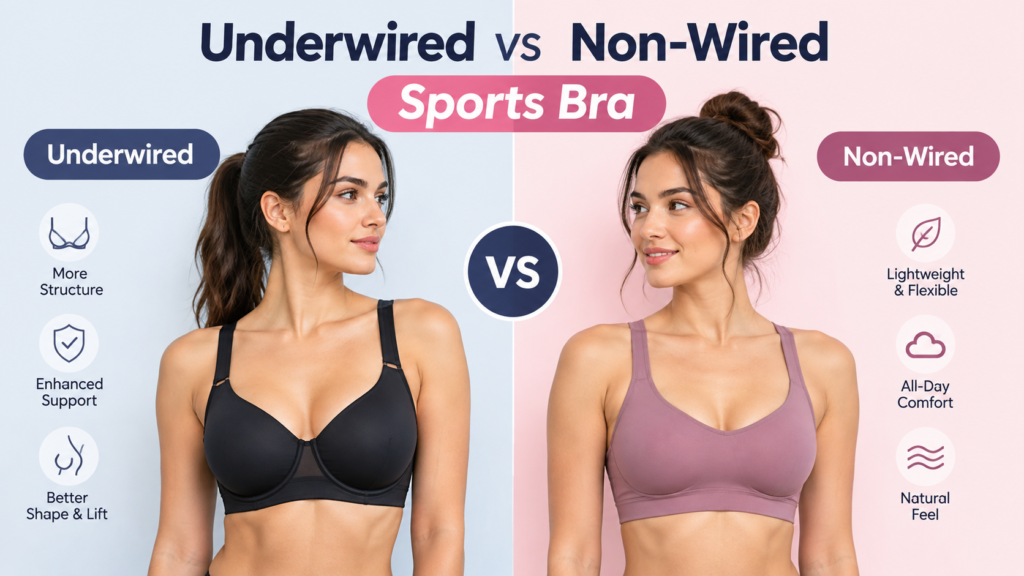
Choosing the right sports bra can make a big difference to comfort, support, and confidence during exercise. One of the biggest choices is whether to wear an underwired sports bra or a non-wired sports bra.
But which one is better? Does an underwire provide more support? Are non-wired sports bras more comfortable? And which style should you choose for running, gym workouts, yoga, or everyday wear?
This guide explains the differences between underwired and non-wired sports bras so you can decide which style suits your body and activity.
What is the difference between an underwired and non-wired sports bra?
The main difference is the structure underneath the cups.
An underwired sports bra contains a supportive wire underneath each breast. The wire helps separate and shape the breasts while providing additional structure.
A non-wired sports bra does not contain an underwire. Instead, it usually relies on compression, encapsulation, wider bands, supportive fabric, or a combination of these features.
Neither design is automatically better for everyone. The right choice depends on your breast size, activity, personal comfort, and the level of support you need.
Are underwired sports bras better for support?
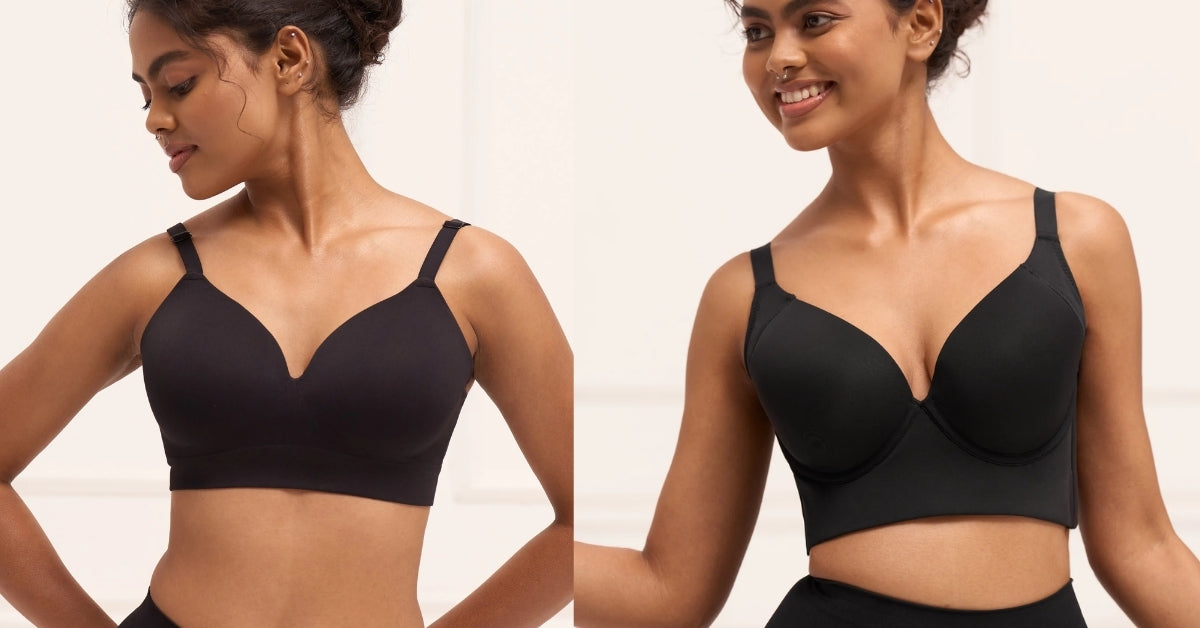
An underwired sports bra can provide strong support, particularly when it is properly fitted.
The underwire helps create a structured shape around the breasts, while the rest of the bra provides additional support. Some underwired sports bras use individual cups to support each breast separately.
However, an underwire alone does not guarantee better support. A well-designed non-wired sports bra can also provide substantial support, especially when it uses strong materials, a supportive underband, and an appropriate level of compression.
For high-impact activities such as running or jumping, look for a sports bra specifically designed for high-impact exercise rather than choosing based only on whether it has an underwire.

Are non-wired sports bras more comfortable?
Many people find non-wired sports bras more comfortable because they do not have a wire pressing against the body.
A well-fitting non-wired sports bra can feel flexible and less restrictive, particularly during activities that involve stretching and movement.
However, comfort depends heavily on fit. A non-wired bra that is too tight can still cause pressure, chafing, or discomfort.
If you prefer a softer and less structured feeling, a non-wired sports bra may be worth considering.
Are underwired sports bras comfortable for exercise?
Yes, an underwired sports bra can be comfortable during exercise when it fits correctly and is designed for sports.
The underwire should sit around the breast tissue rather than directly on it. It should also remain in place when you move.
If the wire digs into your skin, presses painfully against your ribs, or moves around during exercise, the bra may not fit correctly or may not be suitable for your activity.
A sports bra with an underwire should feel supportive rather than painful.

Can you wear a non-wired sports bra for running?
Yes. Non-wired sports bras can be used for running, provided they offer enough support for your body and the intensity of your workout.
Running creates repeated movement, so look for features such as:
- Strong supportive fabric
- A secure underband
- Adjustable straps
- Good breast coverage
- Moisture-wicking material
- A design intended for high-impact activity
Some runners prefer non-wired designs because they allow comfortable movement without the structure of an underwire.

Is an underwired sports bra better for large breasts?
Not necessarily.
People with larger breasts may benefit from a sports bra that provides excellent encapsulation, compression, a firm underband, adjustable straps, and adequate coverage.
An underwired sports bra can provide useful structure, but a high-support non-wired sports bra can also work very well.
Instead of focusing only on the wire, check the bra’s support level and fit.
If your breasts move excessively during exercise, the bra feels painful, or the band rides up, consider trying a different size or a sports bra designed specifically for higher support.
Are non-wired sports bras good for large breasts?
Yes. Non-wired sports bras can be suitable for larger breasts.
Look for designs that provide:
- Wide and supportive straps
- A firm but comfortable underband
- Full breast coverage
- Strong supportive fabric
- Separate cup support or effective compression
- A high-impact rating when needed
Some non-wired sports bras are specifically designed for fuller busts and can provide substantial support without an underwire.
Which is better for high-impact exercise: underwired or non-wired?
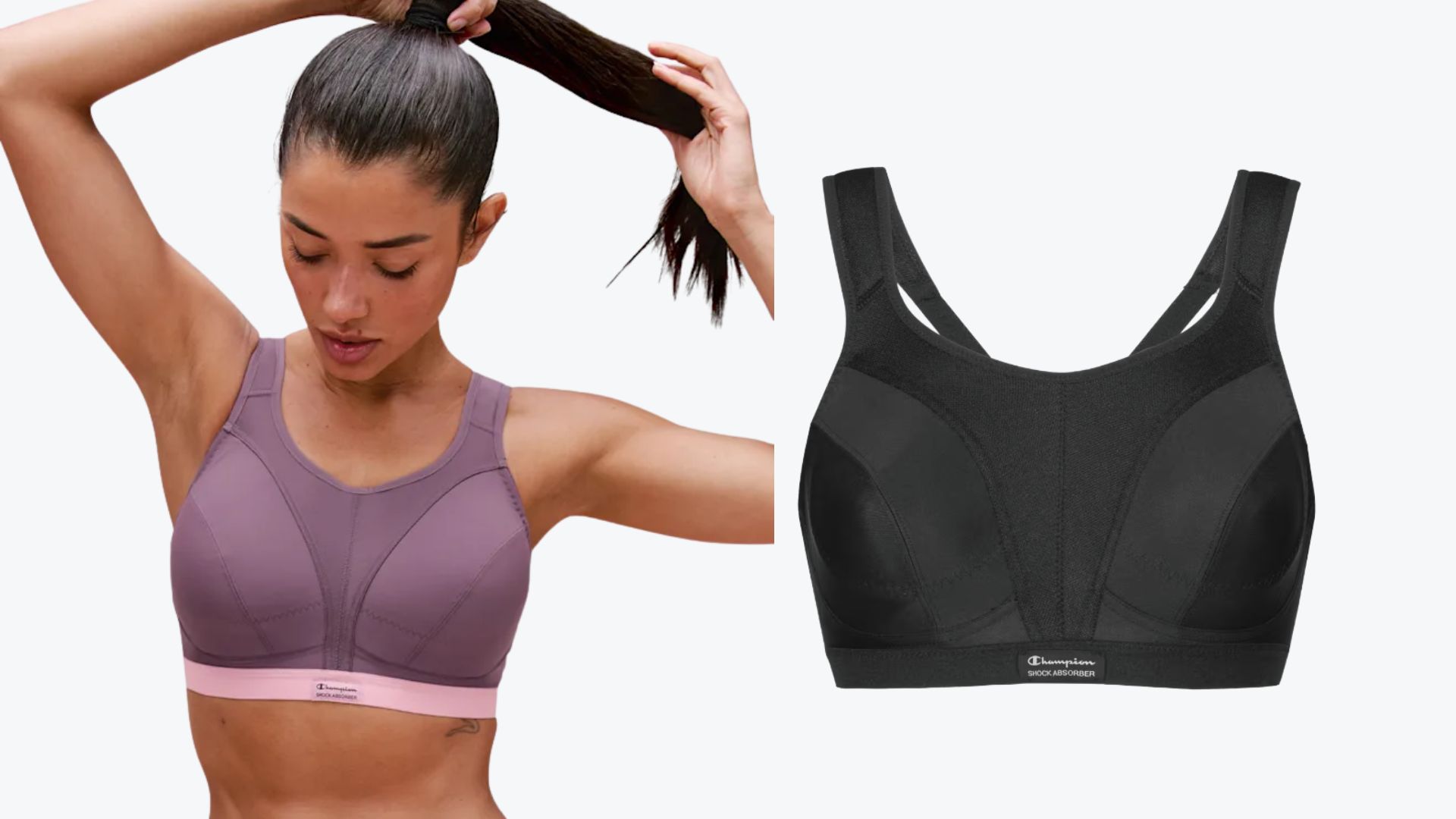
Both can work for high-impact exercise.
The most important factor is whether the sports bra provides enough support for the activity and fits your body correctly.
For running, HIIT, jumping workouts, and similar activities, look for a high-impact sports bra rather than choosing purely based on whether it is wired.
A high-impact non-wired sports bra may provide excellent support, while a properly designed underwired sports bra can also be effective.

Which is better for yoga: underwired or non-wired?
A non-wired sports bra is often a comfortable option for yoga because yoga involves bending, stretching, twisting, and changing positions.
You generally do not need the same level of support for yoga that you might need for running.
Look for a sports bra that provides comfortable coverage without restricting your movement.
For gentle exercise, comfort and flexibility may be more important than maximum support.
Which is better for the gym: underwired or non-wired?
It depends on the type of workout you do.
For weight training and lower-impact gym exercises, either style can work. For cardio, jumping, treadmill running, or intense circuits, choose a sports bra with an appropriate support level.
If your gym routine combines different types of exercise, a medium- or high-support sports bra may be more practical.
Can you wear an underwired sports bra all day?
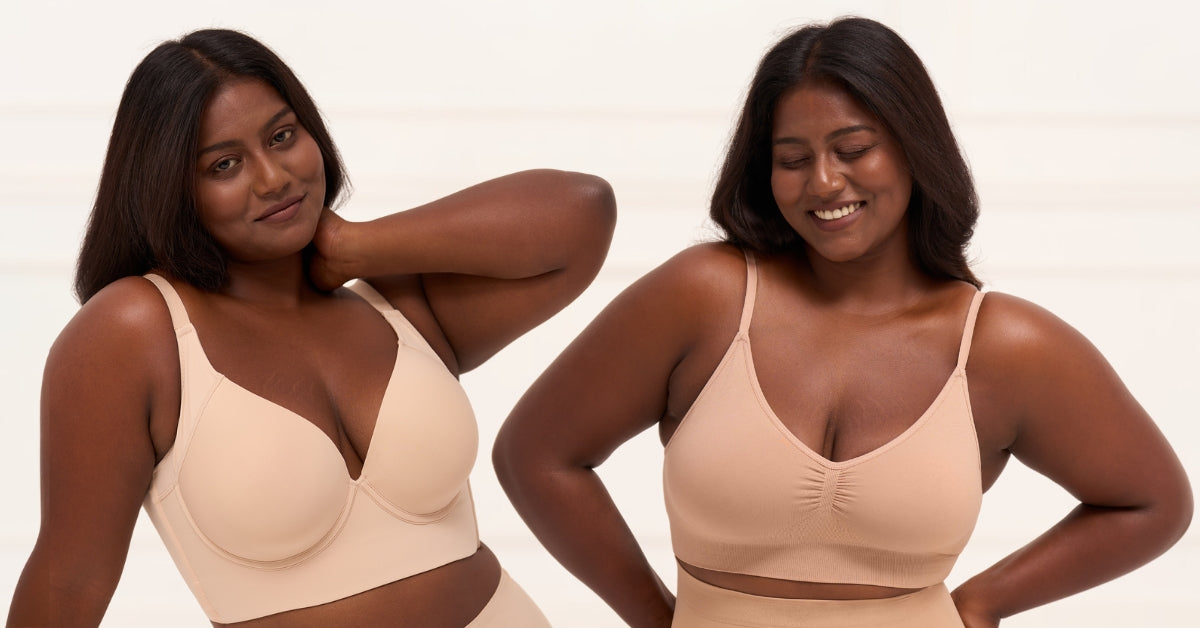
You can wear an underwired sports bra for extended periods if it fits comfortably and does not cause pain or irritation.
However, sports bras are designed primarily for physical activity, and some high-support designs may feel restrictive for everyday use.
For daily wear, many people prefer a softer, flexible, non-wired style.
Your comfort should be the deciding factor. If the wire digs into your skin or causes discomfort, consider changing the size, style, or bra type.
Can you wear a non-wired sports bra every day?
Yes, a non-wired sports bra can be worn as an everyday bra if it is comfortable and provides the support you want.
Light- and medium-support sports bras are often more suitable for everyday activities than highly compressive designs.
If you wear one for long periods, make sure it does not feel excessively tight or cause rubbing, pressure, or restricted breathing.
Do underwired sports bras reduce breast movement better?
They can, but breast movement depends on the entire design of the sports bra.
Underwired bras can use encapsulation, where each breast is supported separately. This can help control movement.
Non-wired sports bras may use compression, pressing the breasts closer to the chest to reduce movement.
Some modern sports bras combine different support technologies, so the presence of an underwire is not the only factor that determines how well a bra controls movement.
Are underwired sports bras bad for you?
An underwired sports bra is not inherently bad for you.
Problems are more likely when the bra is poorly fitted or unsuitable for the activity. A wire that is too small, incorrectly positioned, or pressing into breast tissue can cause discomfort and irritation.
If an underwired sports bra consistently causes pain, try a different size, shape, or non-wired design.
Are non-wired sports bras healthier than underwired sports bras?
There is no simple rule that non-wired sports bras are healthier than underwired sports bras.
Both can be suitable choices when they fit properly and provide appropriate support.
The most important considerations are comfort, fit, support, movement, and whether the bra is appropriate for your activity.
Underwired vs non-wired sports bra: pros and cons
Underwired sports bra
Pros:
- Can provide strong structural support
- Can separate and support each breast
- May provide useful shaping
- Can be suitable for higher-support activities
- May work well for fuller busts when correctly fitted
Cons:
- Can feel restrictive for some people
- May dig into the ribs if poorly fitted
- Can cause irritation if the wire is incorrectly positioned
- May feel less flexible during stretching
Non-wired sports bra
Pros:
- Often feels softer and more flexible
- No wire pressing against the body
- Can be comfortable for everyday wear
- Suitable for yoga and many gym activities
- Available in high-support designs
Cons:
- Some designs may provide insufficient support for high-impact activities
- Compression styles can feel tight
- Poorly fitted bands can ride up
- Some designs may provide less individual breast support
How should an underwired sports bra fit?
A properly fitted underwired sports bra should have a wire that surrounds the breast without sitting directly on breast tissue.
The underband should feel firm but comfortable and should remain relatively stable when you move.
The cups should fully contain the breasts without spilling over or leaving large gaps.
The straps should provide support without digging into your shoulders.
You should be able to move, stretch, and exercise without experiencing significant pain or pressure.

How should a non-wired sports bra fit?
A non-wired sports bra should feel secure without being excessively tight.
The band should stay in place when you raise your arms and move around.
Your breasts should remain comfortably contained without excessive spilling or uncomfortable compression.
For high-impact exercise, the bra should minimise uncomfortable movement while still allowing you to breathe and move normally.
Underwired vs non-wired sports bra: which one should you choose?
The best choice depends on what you need from your sports bra.
Choose an underwired sports bra if you prefer structured support, individual breast support, or the feeling of a more defined shape.
Choose a non-wired sports bra if you prefer flexibility, a softer feel, or a wire-free design.
For high-impact exercise, focus on the bra’s actual support level, fit, and construction rather than assuming that wired automatically means more supportive.
The right sports bra is the one that keeps you supported and comfortable during the activity you are doing.

Frequently Asked Questions
Is an underwired sports bra better than a non-wired sports bra?
Neither is universally better. Underwired sports bras offer structured support, while non-wired sports bras can provide excellent support without a wire. The better option depends on fit, activity, body shape, and personal preference.
Can I wear a non-wired sports bra for high-impact exercise?
Yes. A properly fitted high-support non-wired sports bra can be suitable for running, jumping, and other high-impact activities.
Do underwired sports bras hurt?
They should not cause significant pain. If the wire digs into your ribs or breast tissue, check the fit or try a different design.
Are non-wired sports bras better for everyday wear?
They can be. Many people prefer the flexibility and softer feel of non-wired sports bras for everyday activities.
Which sports bra is better for a large bust?
Both wired and non-wired sports bras can work for larger busts. Look for a properly fitted bra with sufficient coverage, a supportive band, and a support level appropriate for your activity.
Can underwired sports bras prevent breast movement?
They can help reduce movement, particularly when the bra uses an encapsulation design. However, the overall construction and fit of the sports bra are also important.
Should I wear an underwired sports bra for running?
You can, provided it is specifically designed for sports and gives you sufficient support without causing discomfort. A high-support non-wired sports bra can also be an effective option.
Final Thoughts
The choice between an underwired and non-wired sports bra ultimately comes down to support, comfort, fit, and activity level.
Underwired designs can provide structured and individual breast support, while non-wired designs can offer flexibility and a comfortable wire-free feel. Both styles are available in options suitable for different levels of exercise.
When choosing a sports bra, don’t simply ask whether it has a wire. Consider how well it fits, how much movement it controls, how comfortable it feels, and whether it is designed for the activity you plan to do.
And if you’re unsure about your size, start with accurate measurements before choosing your sports bra size.