Bra Size Guide UK: How to Measure Your Bra Size Correctly
Finding the right bra size can make a real difference to your comfort, support and confidence. However, many people continue wearing the same bra size for years without checking whether it still fits properly. Changes in weight, hormones, pregnancy, age and breast shape can all affect how a bra fits.
This bra size guide explains how to measure your bra size at home, understand UK bra sizing, read a bra size chart and recognise the signs of a poorly fitting bra. Whether you are buying your first bra or looking for a more comfortable everyday option, these practical steps can help you find a suitable starting size.
You do not need expensive equipment or a professional fitting to get started. A soft measuring tape, a mirror and a few minutes are usually enough to take your measurements.
What Is a Bra Size?
A bra size consists of two main parts: the band size and the cup size.
- Band size: The number, such as 30, 32, 34 or 36, indicates the approximate size of the band around your ribcage.
- Cup size: The letter, such as A, B, C, D or DD, represents the difference between your bust and underbust measurements, interpreted using a sizing system.
For example, 34C is a UK bra size with a band size of 34 and a C cup. However, a C cup does not represent exactly the same breast volume across every band size.
Bra sizing can also vary between brands and styles. Therefore, your calculated size should be treated as a starting point rather than a guarantee that every bra in that size will fit perfectly.
How to Measure Your Bra Size at Home
You can measure your bra size at home by taking two measurements: your underbust and your fullest bust measurement.
Before starting, prepare the following:
- A soft measuring tape marked in inches or centimetres.
- A mirror to check the position of the tape.
- A notebook or phone to record your measurements.
For the most consistent results, measure directly against your skin or while wearing a thin, non-padded bra. Stand naturally, relax your shoulders and breathe normally.
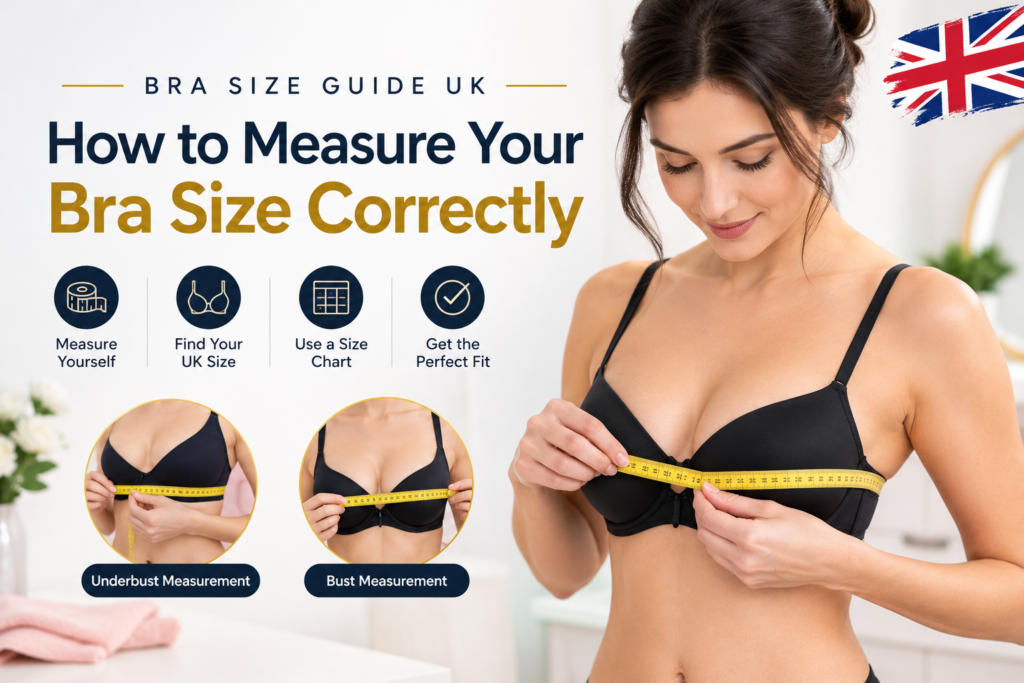
Step 1: Measure Your Underbust
Your underbust measurement helps determine your band size.
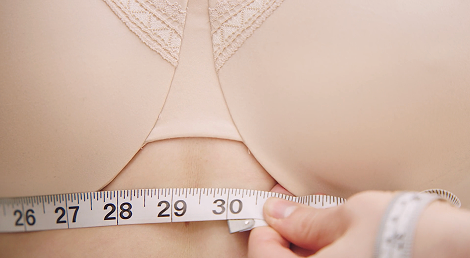
- Place the measuring tape directly beneath your breasts, around your ribcage.
- Keep the tape snug but not uncomfortably tight.
- Check that the tape is level across your back.
- Breathe normally and record the measurement in inches or centimetres.
Do not pull the tape so tightly that it digs into your skin. Equally, avoid leaving it loose, as this can produce an inaccurate measurement.
Use your measurement with a UK bra size calculator or the sizing chart provided by your chosen brand. Different sizing methods may interpret the same measurement differently, so avoid automatically adding four or five inches without checking which method you are using.
Step 2: Measure Your Bust
Your bust measurement helps estimate your cup size.
- Position the measuring tape around the fullest part of your breasts.
- Keep the tape level across your back.
- Make sure the tape touches your body without compressing your breast tissue.
- Record the measurement in the same unit used for your underbust measurement.
Avoid measuring over thick clothing or a heavily padded bra, as these can affect the result.
If your breasts have different sizes, measure naturally without trying to compress either side. You can assess the fit of each cup separately when trying on a bra.
Step 3: Calculate Your Bra Size
Once you have both measurements, use a reliable UK bra size calculator to estimate your band and cup size.
The difference between the bust and band measurements is commonly used to estimate the cup letter. However, the calculation must follow the sizing method used by the calculator or brand.
For example, if your measurements suggest a 34 band and a C cup, your estimated UK size would be 34C.
Try our Bra Size Calculator to help estimate your size from your measurements. Once you have a result, check how the bra feels and use the manufacturer’s size chart before buying.
UK Bra Size Chart: Understanding Band and Cup Sizes
UK bra sizes generally combine even-numbered band sizes with cup letters. The following table provides examples of commonly available UK sizes.
| Band size | Example cup sizes |
|---|---|
| 28 | 28A, 28B, 28C, 28D |
| 30 | 30A, 30B, 30C, 30D |
| 32 | 32A, 32B, 32C, 32D |
| 34 | 34A, 34B, 34C, 34D |
| 36 | 36A, 36B, 36C, 36D |
| 38 | 38A, 38B, 38C, 38D |
| 40 | 40A, 40B, 40C, 40D |
| 42 | 42A, 42B, 42C, 42D |
These are illustrative examples, not a complete size chart. Many brands offer additional band sizes and cup letters, including AA, DD, E, F, FF, G and beyond.
How Do UK Cup Sizes Work?
UK cup sizing includes letters such as A, B, C and D, followed by additional sizes such as DD, E, F and FF in many ranges.
One important point is that cup letters are relative to band size. For example, 30D and 36D do not have identical cup volumes.
For this reason, choosing a bra simply because you know your cup letter may not give you the right fit. Consider both measurements and the shape of the bra.
How Should a Bra Fit Properly?
Knowing your measurements is useful, but the most important step is checking the fit. A well-fitting bra should feel secure without causing discomfort.
1. Check the Band
The band provides much of the bra’s support. It should sit firmly and horizontally around your body rather than riding up at the back.
You should be able to breathe comfortably, and the band should not dig painfully into your skin.
If the band rides upwards, it may be too loose. If it feels excessively tight, check both the band and cup sizes before deciding which needs adjusting.
2. Check the Cups
Your breasts should sit comfortably inside the cups without excessive spilling over the top or sides.
If the cups wrinkle or have large empty spaces, they may be too large, or the cup shape may not suit your breast shape.
If breast tissue spills over the top or sides, consider trying a larger cup or a different cup style.
3. Check the Underwires
For an underwired bra, the wires should follow the natural crease beneath your breasts and surround the breast tissue.
They should not rest on breast tissue, dig painfully into your ribs or press uncomfortably into your underarms.
If the wires feel uncomfortable despite changing sizes, a different bra shape or a non-wired design may work better.
4. Adjust the Straps
Bra straps should sit comfortably on your shoulders without slipping repeatedly or digging into your skin.
Adjust them so they provide gentle support without carrying all the weight of the breasts. Straps that dig in may indicate a band that is too loose, an unsuitable cup size or a style that does not suit your body.
5. Check the Centre Front
On many underwired bras, the centre section between the cups should sit close against your breastbone.
If it sits noticeably away from your chest, the cup size or bra design may not be suitable. However, the expected fit can vary with plunge bras, wireless styles and different breast shapes.

What Are Sister Sizes in Bras?
Sister sizes are bra sizes with similar cup volumes but different band sizes.
They can be helpful when a bra’s cups seem suitable but the band feels too tight or too loose.
For example:
- 34C and 32D: Moving down one band size generally means moving up one cup letter to maintain a similar cup volume.
- 34C and 36B: Moving up one band size generally means moving down one cup letter to maintain a similar cup volume.
These are approximate sister-size relationships, and the actual fit depends on the brand and design.
If your 34C feels comfortable in the cups but the band is too loose, trying 32D may be worthwhile. If the band feels too tight, 36B could be an alternative to test.
Remember that changing sister sizes does not guarantee a better fit. The cups, wires and overall shape must still suit your body.

Different Types of Bras and Their Fit
The right bra style depends on your clothing, activities, comfort preferences and breast shape.
T-Shirt Bras
T-shirt bras usually have smooth cups designed to create a discreet appearance beneath fitted clothing. Look for cups that sit smoothly without gaping or cutting into your breast tissue.
Sports Bras
Sports bras are designed to reduce breast movement during physical activity. The right level of support depends on the exercise you do, from walking and yoga to running and high-impact training.
Check the manufacturer’s sports-bra sizing chart, as some designs use standard bra sizes while others use sizes such as S, M, L and XL.
Push-Up Bras
Push-up bras use padding or shaping to lift the breasts and create a fuller appearance. Check that the padding feels comfortable and that your breast tissue is not pushed out of the cups.
Non-Wired Bras
Non-wired bras can provide a comfortable alternative to underwired styles. Look for a secure band and sufficient coverage, particularly if you want everyday support.
Full-Coverage Bras
Full-coverage bras offer more coverage across the breast. They may suit people who prefer a secure feel, but the cup shape and wire placement should still match their breast shape.
Common Bra Fitting Mistakes to Avoid
Even small measuring errors can affect your estimated bra size. Avoid these common mistakes:
- Measuring over thick clothing or padded bras.
- Allowing the measuring tape to slope across your back.
- Pulling the tape too tightly or leaving it too loose.
- Assuming that every brand follows identical sizing.
- Choosing a size based only on the cup letter.
- Ignoring discomfort because the label shows your usual size.
- Continuing to wear an old bra after your measurements have changed.
For a more reliable result, repeat your measurements and compare them with the size chart for the bra you intend to purchase.
When Should You Measure Your Bra Size Again?
It is worth checking your bra size whenever your existing bras stop fitting comfortably.
You may need to measure again after a noticeable weight change, pregnancy, breastfeeding, hormonal changes or changes in breast shape. You can also recheck your measurements periodically, even if you have not noticed a major change.
There is no single bra size that must remain correct throughout your life. Comfort and fit are more useful indicators than sticking to a particular number or letter.
If you experience persistent breast pain, skin irritation or another concerning symptom, seek appropriate medical advice rather than assuming the issue is simply your bra size.
Frequently Asked Questions About Bra Sizes
How can I find my bra size in the UK?
Measure around your ribcage directly beneath your breasts and around the fullest part of your bust. Use both measurements with a UK bra size calculator or your chosen brand’s sizing chart, then check the fit by trying on the bra.
Is a 34C bigger than a 32C?
A 34C generally has a larger band and greater cup volume than a 32C. Cup letters are relative to band size, so the letter alone does not tell you the full size of the cup.
What is the difference between UK and US bra sizes?
UK and US bra sizing systems can differ, particularly in the sequence of cup letters used for larger sizes. Do not assume that the same label represents an identical size in both systems. Check the specific brand’s conversion chart.
How tight should a bra band be?
A bra band should feel firm and secure while allowing comfortable breathing and movement. It should remain reasonably level around your body without digging painfully into your skin or riding up at the back.
Why do my bra cups gape at the top?
Gaping can occur when the cups are too large, the bra shape does not suit your breast shape or the straps are adjusted incorrectly. Try adjusting the straps and testing another cup size or style.
Can my bra size change over time?
Yes. Weight changes, pregnancy, breastfeeding, hormonal fluctuations and ageing can affect breast size and shape. Rechecking your measurements can help you identify a more suitable fit.
Should I wear the same bra size in every brand?
Not necessarily. Different brands use different patterns, materials and sizing approaches. Your usual size is a helpful starting point, but always check the brand’s size chart and try the bra on where possible.
Find Your Bra Size with Confidence
Finding the right bra size starts with accurate measurements, but the best fit also depends on comfort, breast shape and bra design.
Use this bra size guide to measure your underbust and bust, understand UK band and cup sizes, and recognise common fitting problems. If you are unsure about your measurements, compare your results with a suitable size chart and test a few neighbouring sizes.
Ready to get started? Visit CalculatingBraSize.co.uk and use our bra size calculator to estimate your size. A little time spent checking your fit can make choosing your next everyday, sports or T-shirt bra much easier.
Disclaimer: Bra size calculations provide an estimate rather than a guaranteed fit. Sizing can vary between brands, styles and countries. Always check the manufacturer’s size guide and prioritise comfort.